

If you are searching for TMJ Clicking Sound Treatment in Dubai, you may have noticed a clicking or popping sound every time you open your mouth wide, take a big bite of food, or yawn. While many people ignore these sounds because they are not immediately painful, they can be an early sign of a temporomandibular joint (TMJ) disorder. Left untreated, TMJ disorders can lead to chronic jaw pain, headaches, difficulty chewing, and even damage to your teeth. According to Dr. Mukhallat Qazi, Specialist Oral and Maxillofacial Surgeon at Crossroads Dental Clinic in Deira and Sheikh Zayed Road, Dubai, early diagnosis and intervention can help prevent long-term complications and restore comfortable jaw function.
What Is the TMJ?
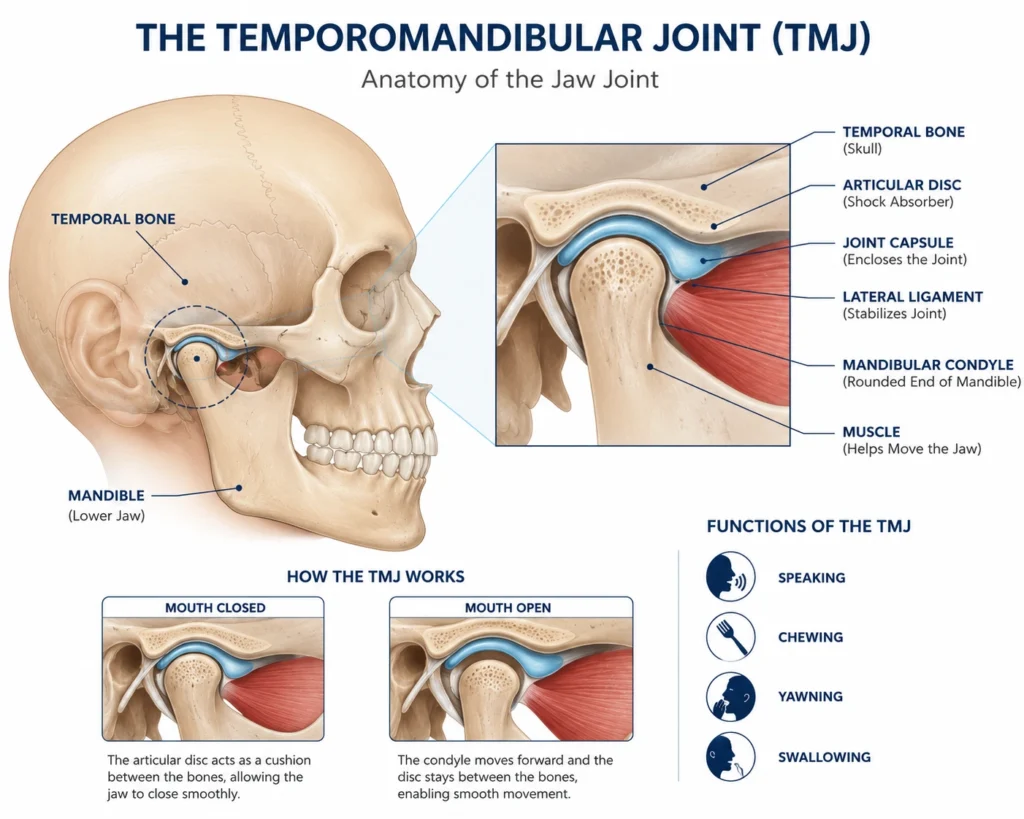
The temporomandibular joint (TMJ) is one of the most complex joints in the human body. It connects the lower jaw (mandible) to the skull and allows you to perform everyday movements such as:
- Speaking
- Chewing
- Smiling
- Swallowing
- Yawning
You have two temporomandibular joints, one on each side of your face, located just in front of your ears.
These joints work together with muscles, ligaments, and a small cushioning disc that helps the jaw move smoothly. When any of these structures become irritated, inflamed, misaligned, or damaged, TMJ disorder can develop.
Why Does My Jaw Click or Pop?
A popping sound in the jaw usually occurs when the cushioning disc inside the joint moves out of its normal position and then shifts back into place during jaw movement.
Think of it like a door that doesn’t slide perfectly on its track. Every time the jaw opens or closes, the disc may snap into position, creating the clicking sound you hear.
Common causes of jaw clicking include:
Teeth Grinding and Clenching
Many people grind or clench their teeth during sleep without realizing it. This excessive pressure places strain on the jaw joints and surrounding muscles, increasing the risk of TMJ disorder.
Stress and Muscle Tension
Stress often leads to unconscious jaw tightening throughout the day. Over time, this constant tension can affect the normal function of the jaw joint.
Injury or Trauma
A fall, sports injury, car accident, or direct impact to the face can alter the position of the jaw joint and lead to clicking, pain, or limited movement.
Arthritis
Arthritis can affect the temporomandibular joint just as it affects other joints in the body. The resulting inflammation may contribute to joint noises and discomfort.
Bite Problems
Misaligned teeth or an improper bite can place uneven pressure on the jaw joints, causing strain and dysfunction over time.
Excessive Jaw Movement
Frequently chewing gum, biting hard foods, nail biting, or opening the mouth excessively wide can contribute to TMJ-related issues.
When Is Jaw Clicking a Cause for Concern?
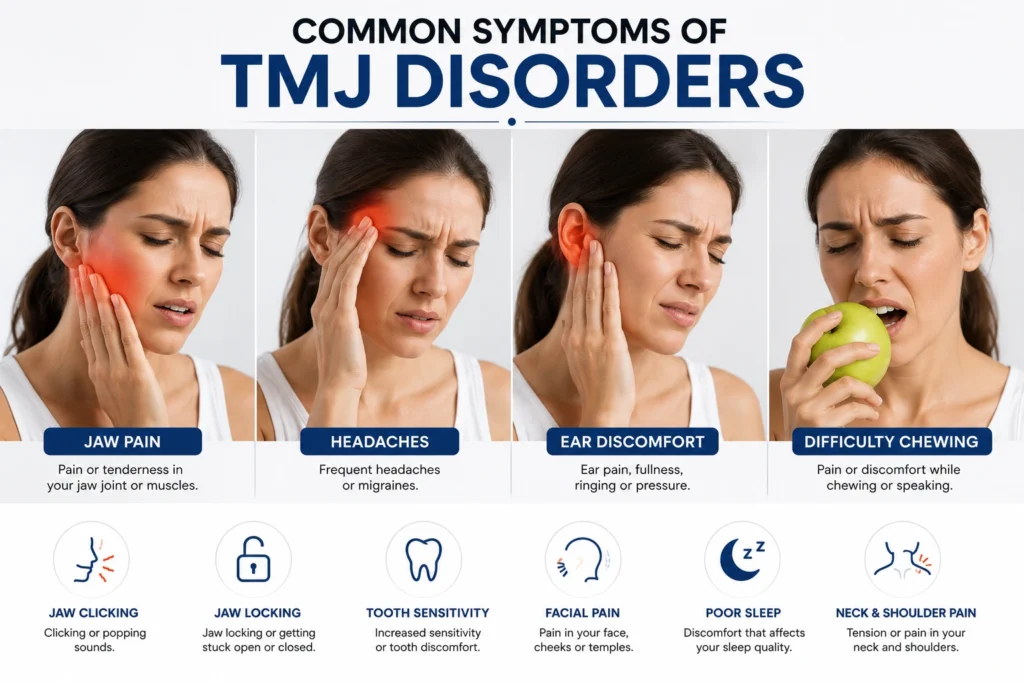
Not every clicking sound indicates a serious problem. Some individuals experience occasional jaw noises without pain or functional limitations.
However, you should seek professional evaluation if you experience any of the following symptoms:
- Jaw pain
- Facial pain
- Difficulty chewing
- Jaw locking
- Limited mouth opening
- Frequent headaches
- Ear pain without infection
- Neck pain
- Shoulder tension
- Teeth sensitivity
- Increased teeth wear
- Grinding or clenching habits
These symptoms often suggest that the jaw joint is under stress and may require treatment.
Signs That Your TMJ Disorder May Be Progressing
One of the biggest mistakes patients make is waiting until severe pain develops before seeking help.
TMJ disorders often progress gradually.
Early-stage symptoms may include:
- Mild clicking
- Occasional jaw stiffness
- Fatigue while chewing
As the condition worsens, patients may notice:
- Frequent headaches
- Facial muscle pain
- Difficulty opening the mouth fully
- Jaw locking episodes
- Chronic discomfort
- Tooth wear from grinding
Eventually, untreated TMJ dysfunction can affect daily activities such as eating, speaking, and sleeping.
The Connection Between TMJ Disorders and Headaches
Many people are surprised to learn that TMJ disorders are frequently associated with headaches.
When the jaw muscles remain tense for prolonged periods, the tension can radiate into the temples, forehead, neck, and shoulders.
Patients often describe:
- Morning headaches
- Pressure around the temples
- Tension headaches
- Facial pain
- Pain behind the eyes
Because these symptoms can mimic other conditions, TMJ disorders are sometimes overlooked as the underlying cause.
Can TMJ Disorders Damage Your Teeth?
Yes.
One of the lesser-known consequences of TMJ dysfunction is its effect on dental health.
Many TMJ patients also suffer from teeth grinding, known as bruxism. Continuous grinding can cause:
- Cracked teeth
- Chipped teeth
- Tooth sensitivity
- Worn enamel
- Increased risk of fractures
- Damage to dental restorations
Addressing the TMJ issue early can help protect both the jaw joint and the teeth.
How Is TMJ Disorder Diagnosed?
At Crossroads Dental Clinic in Dubai, Dr. Mukhallat Qazi performs a comprehensive evaluation to identify the underlying cause of TMJ symptoms.
The assessment may include:
Medical and Dental History
Understanding symptoms, lifestyle habits, stress levels, and previous injuries can provide valuable diagnostic clues.
Clinical Examination
The jaw joints, facial muscles, bite alignment, and jaw movements are carefully examined.
Imaging Studies
When necessary, advanced imaging may be recommended to evaluate joint structures and determine the severity of the condition.
Early diagnosis often leads to more conservative and effective treatment options.
TMJ Treatment Options in Dubai
The good news is that many TMJ disorders can be managed successfully, especially when treatment begins early.
Jaw Exercises
Specific jaw exercises can improve mobility, strengthen supporting muscles, and reduce tension around the joint.
These exercises are often recommended as part of a personalized treatment plan.
Lifestyle Modifications
Simple changes can significantly reduce stress on the jaw joint:
- Avoid chewing gum
- Eat softer foods temporarily
- Limit wide mouth opening
- Improve posture
- Reduce stress
Night Guards
For patients who grind or clench their teeth, a custom-made night guard can help protect the teeth while reducing strain on the jaw joint.
Muscle Relaxation Techniques
Stress management, relaxation exercises, and physical therapy techniques may help alleviate muscle tension contributing to TMJ symptoms.
Bite Evaluation
In some cases, correcting bite-related issues may improve jaw function and reduce symptoms.
Specialist TMJ Care
Complex or advanced TMJ disorders may require specialized treatment from an experienced Oral and Maxillofacial Surgeon.
Why Early Treatment Matters
One of the most important messages Dr. Mukhallat Qazi shares with patients is that early intervention can prevent long-term complications.
The earlier a TMJ disorder is identified, the greater the chances of:
- Preventing chronic pain
- Avoiding tooth damage
- Preserving joint function
- Reducing headaches
- Improving quality of life
Waiting until symptoms become severe can make treatment more complicated and prolong recovery.
When Should You Schedule a TMJ Consultation?
You should consider a professional evaluation if:
- Your jaw clicks regularly
- The clicking is becoming louder
- You experience jaw pain
- You have recurring headaches
- Your jaw feels stiff
- You notice teeth grinding
- Your jaw occasionally locks
- Chewing has become uncomfortable
Even if the symptoms seem minor, an assessment can help determine whether the condition requires treatment.
Expert TMJ Care at Crossroads Dental Clinic, Dubai
If you hear a clicking or popping sound every time you open your mouth, take a big bite, or yawn widely, don’t ignore it.
That small clicking sound may be an early warning sign of a developing TMJ disorder.
Dr. Mukhallat Qazi, Specialist Oral and Maxillofacial Surgeon at Crossroads Dental Clinic in Deira and Sheikh Zayed Road, Dubai, provides comprehensive evaluation and management of jaw joint disorders, facial pain, and TMJ-related conditions.
With early diagnosis, personalized treatment, and professional guidance, many patients can prevent long-term complications and regain comfortable jaw function.
If you are experiencing jaw clicking, jaw pain, headaches, or TMJ discomfort, schedule a consultation today. Early treatment can make all the difference in protecting your jaw, your teeth, and your overall quality of life.