
You want to improve your smile, but the thought of having healthy teeth filed down makes you hesitate. If you are exploring no-prep veneers in Dubai, that concern is probably one of your first questions. Can you change the shape or colour of your teeth while keeping more of your natural enamel?
For selected patients, a no-prep approach may make that possible. However, it is not automatically better than traditional veneers. The right choice depends on your starting teeth, your bite and the changes you want to achieve.
At Crossroads Dental Clinic, Dubai, you can start that conversation by explaining what you like about your smile and what you would change. This guide will help you understand the options and prepare useful questions for your consultation.
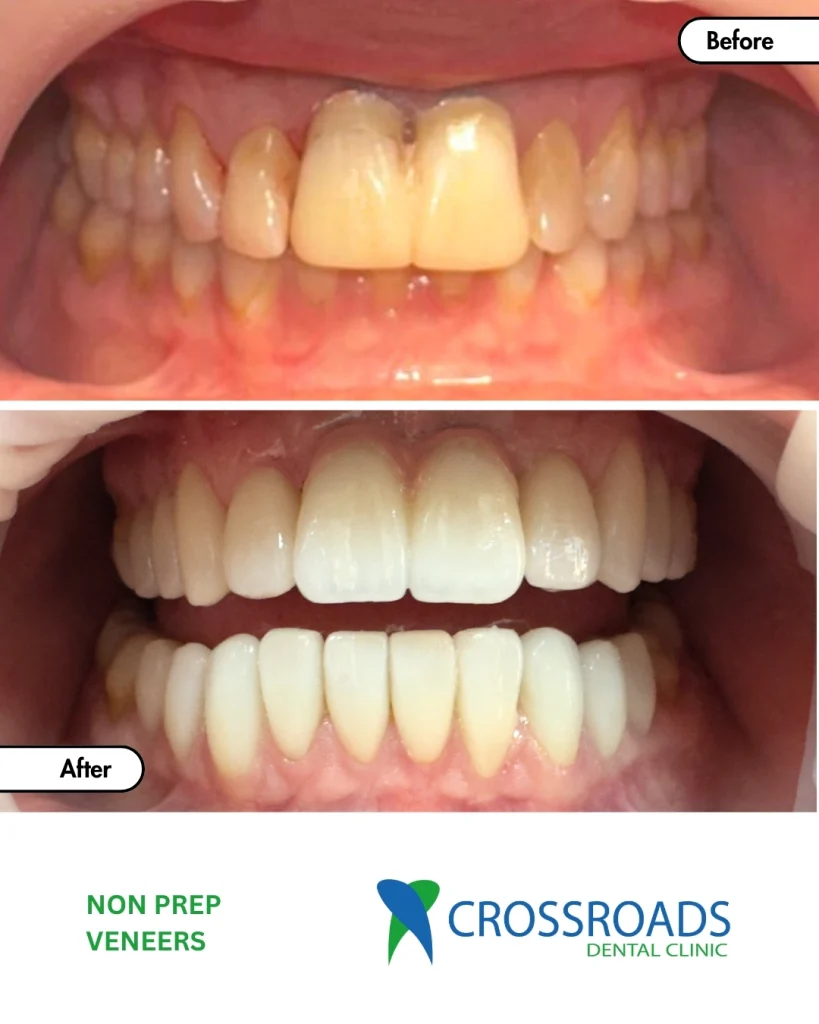
What are no-prep veneers in Dubai?
No-prep veneers are thin restorations bonded to the visible surfaces of teeth, with the intention of avoiding mechanical enamel reduction in suitable cases. They add material to change the appearance of your smile.
You may also see the term minimal-prep veneers. The distinction matters: minimal-prep treatment involves limited reshaping. Some treatments advertised as “no-prep” still involve small adjustments, so ask what the proposed treatment means for each tooth. Cleveland Clinic explains that these conservative veneer approaches still require individual assessment and may involve enamel removal.
If your priority is veneers without shaving teeth, say so at the beginning. Ask the dentist to explain whether that is realistic before you agree to treatment.
How are traditional veneers different?
Traditional porcelain veneers usually require a controlled amount of enamel removal to create room for the restoration. The amount depends on the tooth and the planned result. Traditional treatment does not automatically mean extensive tooth reduction.
The aim is to create the desired shape while preserving as much suitable enamel as possible. A clinical review of porcelain veneers emphasises keeping preparation within enamel where possible, because this supports reliable bonding.
For anyone comparing porcelain veneers in Dubai, ask to see the preparation plan alongside the proposed appearance. Understanding both makes the decision clearer than choosing from a treatment name alone.
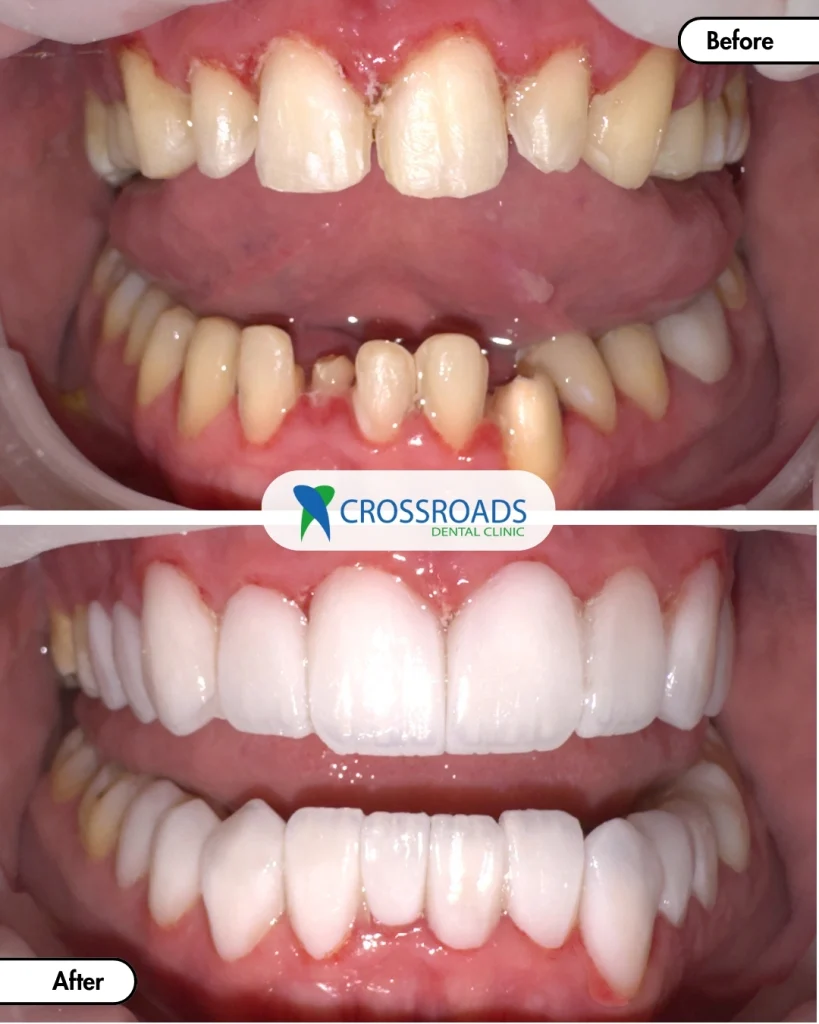
No-prep veneers vs traditional veneers
The main difference is how the dentist makes room for the finished smile. This comparison is a starting point for discussion, rather than a way to diagnose your own suitability.
| Consideration | No-prep approach | Traditional approach |
|---|---|---|
| Tooth preparation | Aims to avoid mechanical reduction in selected cases | Usually requires controlled enamel removal |
| Smile changes | Depends on whether adding material suits existing teeth | Preparation provides room to modify contours |
| Main question | Will the added material fit naturally? | How much preparation is needed and why? |
| Long-term commitment | Do not assume removal will restore untouched teeth | Removed enamel cannot grow back |
| Best choice | Determined by examination and planning | Determined by examination and planning |
Who may suit a no-prep approach?
The key question is whether your teeth need additional volume. Small teeth, selected spaces and modest shape changes may provide opportunities for an additive approach. However, a small gap does not tell the whole story. Tooth proportions and the way the upper and lower teeth meet also need attention.
Imagine two people asking for wider front teeth. One has naturally narrow teeth with space beside them. The other already has broad teeth that sit forward. The same request could need very different treatment plans.
Bring a few reference photographs if they help you describe your preferences. Explain which details appeal to you: softer corners, slightly longer edges or a more even appearance. These are more useful starting points than asking to copy another person’s smile exactly.
When might traditional veneers be more suitable?
If adding material would make a tooth too prominent, some preparation may be needed. Likewise, a substantial colour change can require a different material thickness or approach from a small adjustment to shape.
This is where a personalised explanation matters. Ask: “What would be compromised if we avoided all preparation?” Then ask whether a smaller cosmetic change could preserve more tooth structure.
Neither veneer approach should be chosen before existing dental problems are assessed. The American Dental Association’s veneer guidance advises treating decay and gum disease first and highlights concerns such as grinding and a deep overbite.
Sometimes the best next step is to address those issues before returning to the cosmetic decision.
Do no-prep veneers look bulky?
They can if the added volume does not suit the starting teeth. “Thin” describes the restoration, but the final appearance also includes the tooth underneath it. That is why a no-prep label alone cannot promise a natural result.
Ask whether a diagnostic mock-up is appropriate. If one is provided, look at your smile from the side as well as straight ahead. Notice how the proposed edges relate to your lower lip and whether the teeth look balanced when you speak.
You can also ask a simple question: “Would you recommend this shape if avoiding preparation were not my main priority?” The answer can help you understand the trade-off between your preferred technique and your preferred appearance.
Are no-prep veneers reversible?
Do not assume that “no-prep” means you can remove the veneers later and return to completely untouched teeth. The amount of preparation, the bonding process and future removal all need to be considered.
Ask your dentist to distinguish between removing a restoration and returning the tooth to its original condition. Those are different outcomes. If enamel is removed, it does not regrow.
Before deciding, ask what would happen if you wanted a different shade later, if one veneer fractured or if you chose to stop wearing veneers. You deserve a clear explanation of the possible future treatment, even when the initial procedure is conservative.
What should you discuss during your consultation?
A useful consultation should leave you understanding why an option suits your teeth. Tell the dentist about previous dental treatment, sensitivity, grinding and anything that bothers you about your bite.
Consider bringing these questions:
- What can we improve without removing enamel?
- Would any teeth need minimal preparation?
- Can I preview the proposed shape before bonding?
- Which limitations apply to my starting tooth colour?
- What alternatives should I consider?
- What follow-up and maintenance will I need?
Ask how many teeth actually need treatment. You do not have to begin with a predetermined number simply because a photograph shows a complete smile makeover.
Before the final bonding appointment, make sure you understand the agreed shade and shape. If you feel uncertain, ask for clarification while changes can still be discussed.
How long do veneers last, and how do you care for them?
Veneers are not lifetime restorations. Cleveland Clinic gives a general lifespan of around 10–15 years for dental veneers with appropriate care, but this is not a guarantee for no-prep veneers or for your individual teeth. Read its guidance on veneer longevity.
Brush twice daily with fluoride toothpaste and clean between your teeth every day. Avoid biting hard objects. Attend the reviews your dentist recommends, and ask about protection if you grind your teeth. The ADA notes that veneers can chip or loosen and that teeth can still develop decay around or beneath them.
If something feels different, such as an uneven bite or a loose edge, arrange a review rather than waiting for your next routine visit.
Frequently asked questions
Photographs help communicate your preferences, but they cannot establish suitability. Ask for an examination that considers the health and position of your teeth as well as their appearance. A treatment recommendation should explain your own starting situation.
Yes. Ask whether whitening, composite bonding or orthodontic treatment could address your concern. You can also discuss making a smaller change or choosing no cosmetic treatment. A consultation should help you compare appropriate options without committing immediately.
Neither name guarantees a natural appearance. Ask how the proposed proportions, shade and surface detail will work with your smile. Describe your preferences clearly, including features you want to preserve, rather than focusing only on what you dislike.
Explore no-prep veneers in Dubai at Crossroads Dental Clinic
If you are considering veneers in Deira or veneers on Sheikh Zayed Road, contact Crossroads Dental Clinic to discuss your smile concerns and ask whether a no-prep assessment is appropriate for you.
When exploring cosmetic dentistry in Dubai, your first appointment should help you understand your choices. Tell our team whether you want to improve a small gap, uneven edges or the overall appearance of your front teeth. Also mention that preserving enamel is a priority.
Book a veneer consultation with Crossroads Dental Clinic, Dubai, and ask which approach can achieve your goals while preserving as much healthy tooth structure as possible.